

Kitami City, Hokkaido
Kitami Yakiniku
Grilled offal captivates the locals:
“Sagari Purism”
with fresh dipping sauce
About Kitami Yakiniku
In Kitami City, Hokkaido, known as the sacred land of yakiniku in the north, the presence of meat-processing plants within the city led to the spread of offal yakiniku among its citizens. Even after beef became more widely consumed, the culture of offal remained strong, and Kitami developed into a “nation of Sagari,” where people preferred sagari (hanging tender, a cut of beef offal) over short ribs.
A defining feature of Kitami’s yakiniku is that the meat is enjoyed without any pre-seasoning, allowing diners to fully appreciate its natural freshness and quality. Since the early days of the city’s yakiniku culture, the traditional combination of a shichirin (charcoal grill) and binchōtan charcoal has remained unchanged. It’s even said that one’s skill and experience with yakiniku can be judged by how well they handle a shichirin.
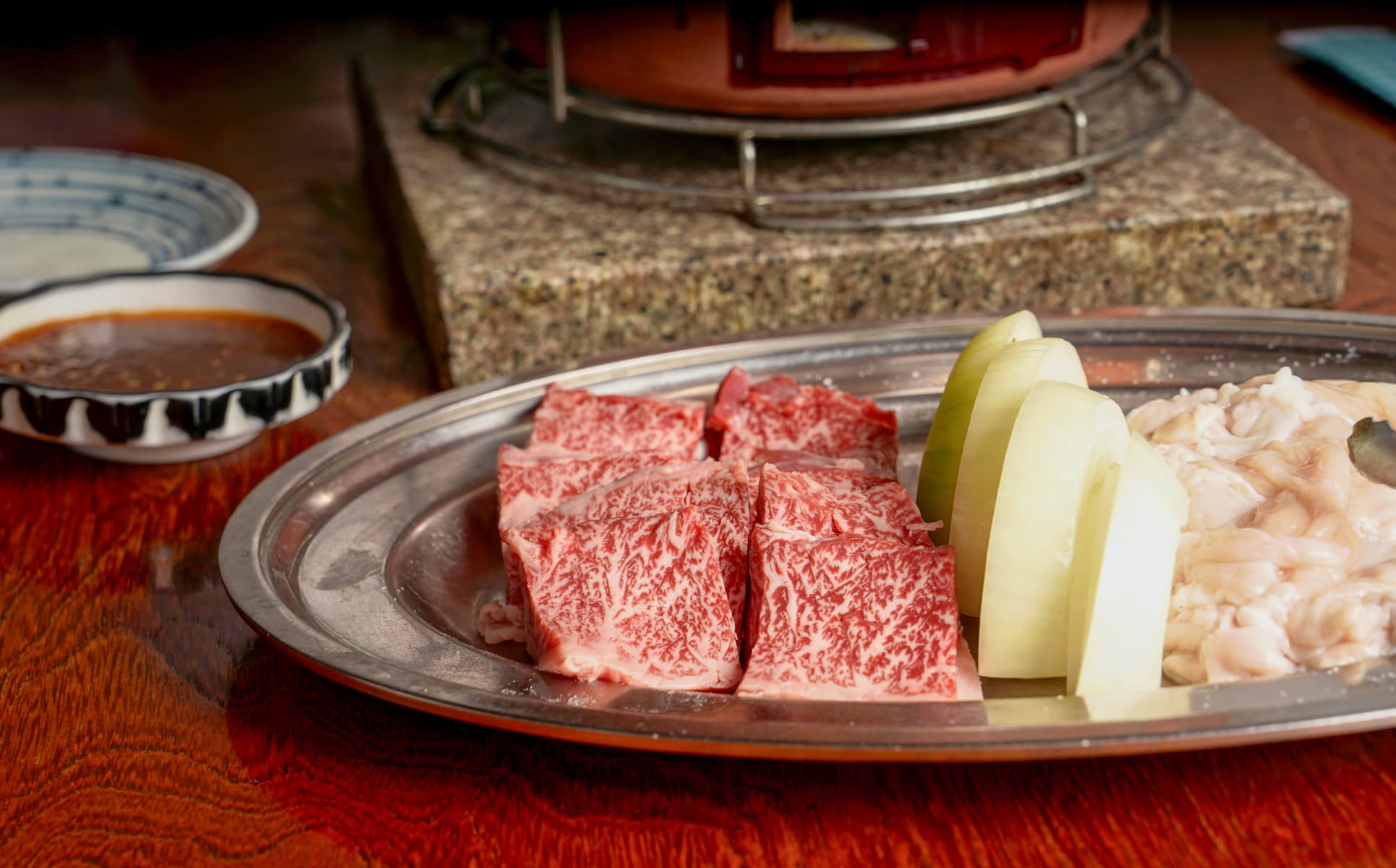
Another hallmark of Kitami-style yakiniku is the use of fresh dipping sauce (nama-dare) and salt and pepper as finishing touches. The so-called nama-dare, dating back to the origins of Kitami’s yakiniku culture, is made by combining generous amounts of fruits and onions, then aging the mixture for several days without heating. This raw, naturally matured sauce complements any cut of meat, bringing out its full flavor. Each restaurant in Kitami continues to refine its own recipe, elevating this traditional tare into a local art form. With nama-dare, Kitami’s authentic yakiniku can be recreated anytime, anywhere—paired beautifully with simple salt and pepper for a balance of freshness and depth.
In this way, Kitami’s yakiniku culture brings together several defining elements: its roots in offal-grilling that evolved into a “kingdom of sagari” (hanging tender), the timeless use of shichirin and charcoal, and its distinctive flavor style of nama-dare and salt-and-pepper seasoning. Together, they form a culinary tradition deeply embedded in the lives of Kitami’s people. Be sure to experience this truly unique style of yakiniku that can only be found in Kitami.


Unseasoned Meat
Kitami’s offal yakiniku took root because of its exceptional freshness. Enjoy it as it is—without any pre-seasoning—to truly taste its quality.
Primarily grilled over charcoal on a shichirin (clay grill)
Since its origins, Kitami yakiniku has stayed true to the classic combination of charcoal and shichirin grills. It’s even said that you can tell a person’s yakiniku experience by how skillfully they handle the shichirin.
Nama-dare and
Salt & Pepper
For Kitami-style yakiniku, which is served without pre-seasoning, the final touch comes from nama-dare and salt & pepper. Enjoy both flavors to the fullest.



Beef sagari
No.1 Beef sagari
Loved by nearly every citizen of Kitami, this dish stands as the undisputed superstar and ultimate classic of Kitami-style yakiniku. In most yakiniku restaurants across Japan, the first phrase you’ll hear is “Let’s start with beef tongue.” But in Kitami, it’s different—the words are, “Let’s start with sagari.”
Originally, the people of Kitami favored pork offal. However, during Japan’s period of rapid economic growth, as beef became more common, they didn’t turn to beef ribs like elsewhere—they chose sagari, a tender, flavorful cut from the diaphragm, considered a type of offal. Today, this beloved beef sagari is cherished by everyone in the city, and the quintessential way to enjoy it is the Kitami style: dipped in nama-dare, the city’s signature fresh sauce.

Pork offal
No.2 Pork offal
From its origins to the present day, pork offal has remained a beloved cornerstone of Kitami-style yakiniku—an essential part of the city’s culinary identity. While maintaining freshness and performing basic cleaning and preparation may seem simple, the skills required to achieve the perfect result reflect the dedication and craftsmanship of both yakiniku restaurants and butcher shops.
Many locals even have their favorite “personal butcher” where they purchase their preferred cuts, showing the depth of Kitami citizens’ devotion to pork offal. When it comes to grilling, there are different schools of thought—some prefer a soft, fluffy finish, while others aim for a crisp, caramelized texture. Demonstrating these preferences has become a familiar and cherished scene in Kitami’s yakiniku restaurants.

Nama-dare
(uncooked sauce)
No.3 Nama-dare (uncooked sauce)
No.3
Nama-dare
(uncooked sauce)
Since the very beginning of Kitami-style yakiniku, the so-called “nama-dare” has been what defines and elevates it. Its secret lies in the generous use of fruits and green onions, aged for several days without heating.
This fresh, mellow sauce perfectly marries with the meat, enhancing any cut to delicious perfection. Each restaurant in Kitami continues to refine its own version, honing the flavor through friendly competition. As long as nama-dare exists, Kitami yakiniku can be recreated anytime, anywhere—it is truly the sacred essence of Kitami-style yakiniku.
Onions
No.4 Onions
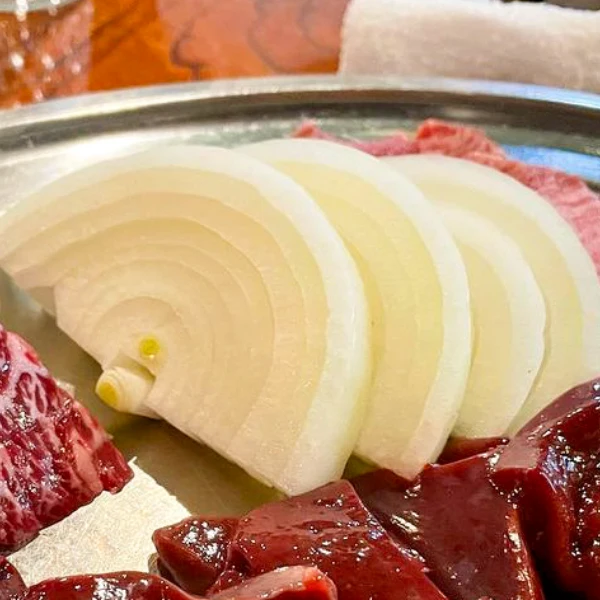
Kitami City in Hokkaido is one of Japan’s premier agricultural regions. Among its produce, onions—grown here in the highest quantity in the country—have become fully integrated into Kitami-style yakiniku. But the reason they’ve taken root isn’t simply “because they’re abundant.”
Kitami onions are low in water content and have firm flesh, which, when grilled, can turn tender and fluffy or crisp and snappy, offering a perfect contrast of texture and sweetness that enhances the yakiniku experience. Their low moisture also allows for year-round storage and distribution, ensuring they are always available. In surveys of Kitami residents, onions consistently rank as the number-one accompaniment to yakiniku, maintaining their role as the ever-reliable supporting star of the meal.
Fried Egg Rice Bowl
No.5 Fried Egg Rice Bowl
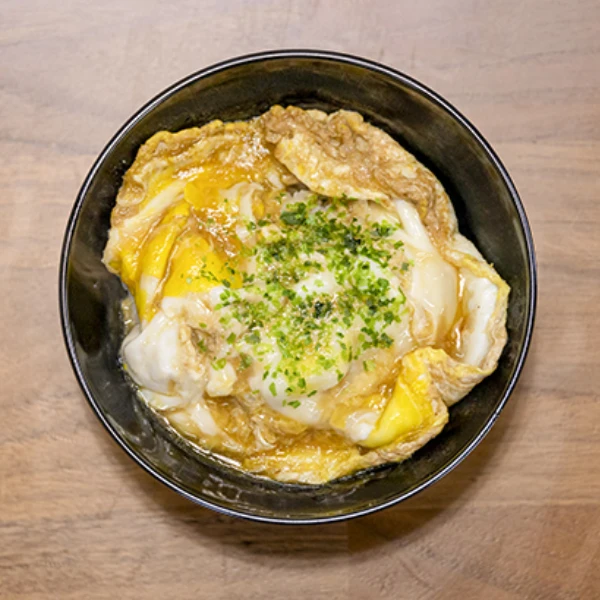
At first glance, the name might seem mysterious, but it’s exactly what it says: a fried egg served over a bowl of rice, making it a classic finishing dish in Kitami-style yakiniku.
Not every restaurant serves it; it originated as a signature item at long-established yakiniku restaurants that stay open late. However, its irresistible taste and approachable style have made it a cultural staple, and other restaurants have since added it to their menus as the “shime no medon” (finishing egg bowl).
The secret to its deliciousness lies in the perfectly soft and fluffy texture of the egg, paired with the savory aroma of sautéed soy sauce. Sometimes, it’s a uniquely Kitami phenomenon for diners to visit a yakiniku restaurant for a medon even after already eating meat at two other places earlier in the night—a quirky yet beloved local habit.